Zweig's highly personal last work, written during the Second World War-a biography of his hero, Michel de Montaigne, and a passionate argument for humanity in times of barbarity 'He who thinks freely for himself, honours all freedom on earth.' Stefan Zweig was already an émigré - driven from a Europe torn apart by brutality and totalitarianism - when he found, in a damp cellar, a copy of Michel de Montaigne's Essais. Montaigne would become Zweig's last great occupation, helping him make sense of his own life and his obsessions - with personal freedom, with the sanctity of the individual. Through his writings on suicide, he would also, finally, lead Zweig to his death. With the intense psychological acuity and elegant prose so characteristic of Zweig's fiction, this account of Montaigne's life asks how we ought to think, and how to live. It is an intense and wonderful insight into both subject and biographer. Stefan Zweig was born in 1881 in Vienna, into a wealthy Austrian-Jewish family. He studied in Berlin and Vienna and was first known as a poet and translator, then as a biographer. Between the wars, Zweig was an international bestseller with a string of hugely popular novellas including Letter from an Unknown Woman, Amok and Fear. In 1934, with the rise of Nazism, he left Austria, and lived in London, Bath and New York - a period during which he produced his most celebrated works: his only novel, Beware of Pity, and his memoir, The World of Yesterday. He eventually settled in Brazil, where in 1942 he and his wife were found dead in an apparent double suicide. Much of his work is available from Pushkin Press.
A notebook of your own for this title
A blank page to write whatever you want, with images, spoilers and links to other titles.
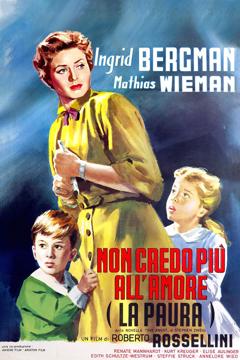
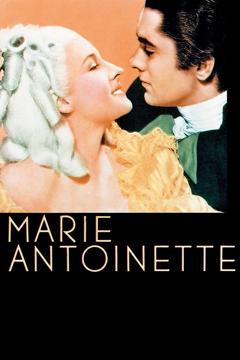
Zweig's highly personal last work, written during the Second World War-a biography of his hero, Michel de Montaigne, and a passionate argument for humanity in times of barbarity 'He who thinks freely for himself, honours all freedom on earth.' Stefan Zweig was already an émigré - driven from a Europe torn apart by brutality and totalitarianism - when he found, in a damp cellar, a copy of Michel de Montaigne's Essais. Montaigne would become Zweig's last great occupation, helping him make sense of his own life and his obsessions - with personal freedom, with the sanctity of the individual. Through his writings on suicide, he would also, finally, lead Zweig to his death. With the intense psychological acuity and elegant prose so characteristic of Zweig's fiction, this account of Montaigne's life asks how we ought to think, and how to live. It is an intense and wonderful insight into both subject and biographer. Stefan Zweig was born in 1881 in Vienna, into a wealthy Austrian-Jewish family. He studied in Berlin and Vienna and was first known as a poet and translator, then as a biographer. Between the wars, Zweig was an international bestseller with a string of hugely popular novellas including Letter from an Unknown Woman, Amok and Fear. In 1934, with the rise of Nazism, he left Austria, and lived in London, Bath and New York - a period during which he produced his most celebrated works: his only novel, Beware of Pity, and his memoir, The World of Yesterday. He eventually settled in Brazil, where in 1942 he and his wife were found dead in an apparent double suicide. Much of his work is available from Pushkin Press.
A notebook of your own for this title
A blank page to write whatever you want, with images, spoilers and links to other titles.

The World of YesterdayBook · 1942Same creator
AmokBook · 1922Same creator
FearBook · 1920Same creator
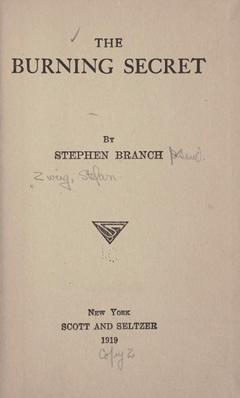
Burning SecretBook · 1911Same creator
Beware of PityBook · 1938Same creator
Verwirrung der GefühleBook · 1926Same creator
Decisive Moments in HistoryBook · 1927Same creator
ClarissaBook · 1976Same creator
MagellanBook · 1938Same creator